

Everything seemed to be going right for the Golden State Warriors 11 games into the season.
After three rough losses to begin the campaign, the team had suddenly found its form, rattling off eight straight wins while offloading some of the scoring burden onto pieces like Yaxel Lendeborg and Brandin Podziemski. That, encouragingly, allowed the team's veterans—including Stephen Curry and Draymond Green—to rest more frequently, even in games in which they played.
If the Warriors were going to survive this first portion of the season with Jimmy Butler, Moses Moody, and Kristaps Porzingis all sidelined, it was always going to take that level of performance from the team's complementary pieces.
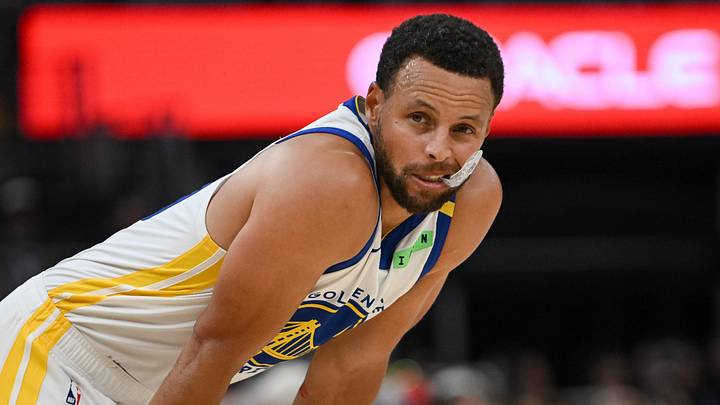
But all good things must come to an end. And in the first quarter of Golden State's loss to the Houston Rockets last night, Curry left the game in the first quarter with what described as an "abdominal strain". Steve Kerr said the level of concern was high until the team got back Curry's MRI results.
Those came back this morning, and Curry will need to miss at least the next two weeks with an oblique tear, as reported by Shams Charania via X.
A two-week timeline is actually relatively positive, considering both Franz Wagner and Paolo Banchero missed extensive time with the same injury last season. But this update confirms that the Warriors will be without Curry for at least seven games—and no matter how the rest of the team plays, that's a development that could gnaw at much of the momentum they've built up so far.
The Warriors can survive without Stephen Curry—but they obviously need him back ASAP
It's important to note that this roster—unlike other recent iterations—seems to have the tools it needs to remain competitive on a nightly basis without Curry in the rotation. They've clawed their way into multiple wins in this stretch without requiring Curry to have a superstar-level performance, and if they can lean into the physicality and intensity they've showcased so far, this should still be a competitive team.
But the goal for the first half of this season needs to be loftier than simply treading water. The Western Conference is deep enough that that sort of play could leave Golden State in a hole too deep to dig out of in the latter part of the season. We saw, over the past two years, the Warriors enter the postseason absolutely exhausted after fighting for play-in position at the end of the regular season slate.
That simply can't happen this year if the Warriors want to have a shot at a deep playoff run, and the groundwork for that needs to be laid now.
In that light, a two-week timeline is encouraging. It doesn't mean that Curry will necessarily be back in that time, but the fact that Golden State hasn't outright ruled him out for longer indicates that the injury isn't as severe as the comparable ones that Banchero and Wagner suffered last season.
Still, this is going to be a test of the Warriors' new identity.
They kicked off a five-game road stretch with the matchup against Houston last night, and they'll need to play the San Antonio Spurs, New Orleans Pelicans, Dallas Mavericks, and Memphis Grizzlies before it's over. Golden State blew out the Pelicans in their last matchup, but each of those other teams present distinct challenges for a Warriors rotation without Curry. All three of those squads are in the top-12 in the league in offensive rating as it stands.
A two-week timeline also puts Curry out for home matchups against the Boston Celtics and Sacramento Kings as well as a road matchup against the surprisingly dynamic Portland Trail Blazers.
The Warriors are currently 8-4. If they can survive that seven game stretch with a 4-3 record—racking up wins against the Mavericks, Pelicans, Kings, and Trail Blazers—they'll be in strong position when Curry is re-evaluated.
But when you're operating with a 38-year-old as your superstar, everything is far from a guarantee. This next stretch will be a potent reminder of that fact for the Warriors.
 Add us as a preferred source on Google