

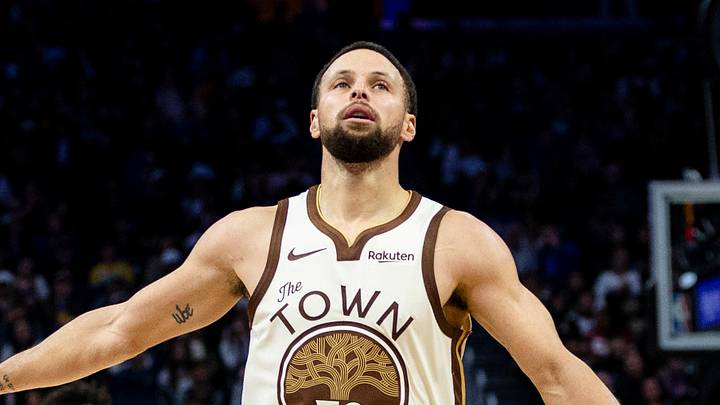
These next couple of seasons for the Golden State Warriors, to an extent, will still be focused on chasing a championship.
It's why Stephen Curry re-signed with the team prior to the start of the season on a two-year, $116 million deal. He believes this roster still has a chance, and the financial flexibility he granted them by taking a pay-cut ensures, at the very least, they'll have the assets to field a competitive roster before it's all said and done.
But there's also a world where the Curry era for the Warriors fades quietly into the sunset. Four championships is a historic mark, and Curry truly has nothing left to prove. If this team continues to fall short between now and the end of the superstar's career, it's safe to say that Curry will retire without regrets on his final contract decision.
Curry's presence with the organization means more than simply keeping the team afloat from a competitive standpoint. Steve Kerr spoke this offseason on how certain aspects of the team's discipline and preparation began to slip toward the end of last season. He was quoted in a piece by Marcus Thompson II at The Athletic today expounding on those comments directly.
“I am 100 percent locked in on the process on how we’re teaching every single day, and I firmly believe that if we do that from the beginning without even mentioning anything about expectations, then we’re going to have a good season.” Steve Kerr via The Athletic
Part of Golden State's mission over these final seasons of the Curry era, then, must be to put in the work to carry that championship culture over to the new crop of players that will take the lead after Curry's departure. Curry's decision to remain with the team will be key to that effort, even if the ultimate outcome of these final seasons is disappointing.
Stephen Curry is the cornerstone of the Warriors' culture—and his presence is integral to whatever a rebuild may look like in Golden State
It's too soon to write the Warriors off completely as long as Curry is still on the roster. Although he was limited last season by a nagging knee issue, he still managed to average 26.6 points, 3.6 rebounds, and 4.7 assists while knocking down 39.3% of his attempts from beyond the arc.
If the Warriors are able to surround him with the right mix of talent, who knows what could happen?
But as much-maligned as the infamous 'two timelines' approach was earlier in Curry's career, Golden State also needs to be seriously thinking about the future as they enter 2026-27. They have a potential two-way star on the roster in Yaxel Lendeborg, and they still have a host of young contributors, including Brandin Podziemski and LJ Cryer, that need to continue developing in their respective roles.
This has to be part of the reason the Warriors brought Kerr back as well. Although there are certainly coaches better-suited to dial in on the development of young pieces, Golden State's mission isn't simply to forego competitiveness for the sake of that development. Kerr was present for the entirety of the Warriors dynasty, and he's going to need to re-implement that same competitive and collective spirit among the team's new additions before this current era comes to an end.
But for a player like Lendeborg, it likely means even more to be able to look at Curry—who's been a bastion of dedication and sacrifice over the course of his 17-year NBA career. No one would've necessarily blamed Curry if he wanted to give himself the option to chase a championship elsewhere before his career came to an end.
But any hope Golden State has of surviving their impending rebuild somewhat intact depends on their ability to institute the right sort of culture and habits into their young additions over the next couple of seasons. Curry's decision to stay with the Warriors, at the very least, gives them that gift.
 Add us as a preferred source on Google